When you buy through links on our articles, Future and its syndication partners may earn a commission.

HOUSTON — NASA's Artemis 2 astronauts have officially struck "moon joy."
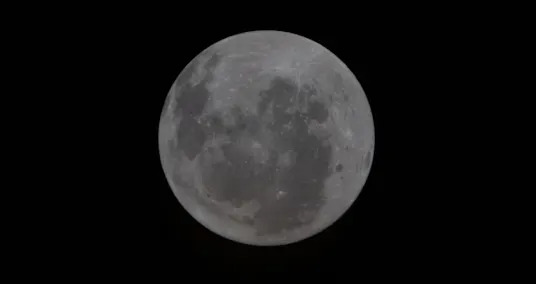
The four astronauts flying around the moon on NASA's Artemis 2 mission had a chance to observe their lunar target late Saturday (April 4), just two days before their historic flyby of Earth's nearest neighbor. And to say the crew was thrilled may be an understatement of cosmic proportions.
"It is phenomenal," Christina Koch, Artemis 2 mission specialist and the first woman to fly to the moon, radioed to Mission Control. "The moon we are looking at is not the moon you see from Earth whatsoever."
Artemis 2 commander Reid Wiseman, a veteran International Space Station astronaut and Navy test pilot, seemed jubilant as well. Koch, Wiseman and their crewmates Victor Glover and Jeremy Hansen are the first astronauts to see the moon from so close in over 53 years.
"I'm not one for hyperbole, but it's the only thing I can come up with," Wiseman said, rattling off moon craters he could see through a 400mm camera lens like Tycho, Copernicus, Rainer and more. "It's just everything from the training, but in three dimensions and absolutely unbelievable. This is incredible."
"Copy, moon joy," Mission Control radioed back.
There was more than just appreciation of the moon coming from the astronauts. The crew radioed back observations of lunar craters, its vast basalt plains known as mare (Latin for "seas"), brightness variations and other details. They turned out the lights in the cabin of their Orion moon ship in order to get a better view.
One key target that scientists are particularly interested in— Orientale Basin, a vast crater on the far side of the moon — was just coming into view.
"We can see over Orientale just with the naked eye. The moon is so bright," Wiseman said. "We can definitely see all of the basin of Orientale. Aristarchus, Copernicus easily all in view. This is so awesome."
Koch shared observations of the terminator line, the stark border between light and darkness that marks the change from lunar day and night.
"We do apparently have a full moon; we can't detect any terminator at all. It looks like full limb all the way around," Koch said. But she did spot the terminator later. "I do think we have a terminator ... you can see the topography all along the terminator, and it is awesome."
The observations from the crew were music to the ears of NASA's Artemis 2 science team. Researchers have been working with the Artemis 2 astronauts for months, training them on what targets to seek out and how to report what they see.
Jennifer Hellmann, an Artemis 2 science team lead from NASA Ames Research Center, said the mood was ecstatic.
"You could hear the excitement in their voices. They were just beside themselves looking at the moon," Hellmann told Space.com in an interview in the Science Evaluation Room here at NASA's Johnson Space Center.
"We were thrilled by the quality of their observations already," Hellmann added. "You know, they they are trained. They know the moon, they know the geography, they know the science. You can see it all coming together."
NASA's Artemis 2 mission launched to the moon on April 1 and will fly by the moon on Monday (April 6). The lunar flyby will last seven hours and start at about 1:30 p.m. EDT (1730 GMT). Our live coverage of the flyby will begin at 1 p.m. EDT (1700 GMT). You can get live updates on the flight from our Artemis 2 mission updates page.

The only Lego Technic NASA Artemis Space Launch System Rocket, once built it can 'launch' thanks to the clever Technic engineering mechanisms inside. It stands 27.5-inches (70 cm) tall but is made from only 632 pieces, making this suitable for ages 9+, compared with the adult-oriented (and $260) static Lego Icons NASA Artemis Space Launch System (10341) model.
LATEST POSTS
- 1
 'Malcolm in the Middle' reboot releases 1st trailer, reuniting Frankie Muniz and Bryan Cranston: Watch here
 - 2Germany expresses 'great concern' over Israel's new death penalty law
- 3The wolf supermoon will kick off 2026 with a celestial bang. Here's when and how to see it.
- 4Sudan war ‘being fought on women’s bodies’: Survivors detail sexual assault
- 5‘Inoculation’ helps people spot political deepfakes, study finds





- 'It's doing badly': Fears grow for whale stuck off Germany's coast
- Last supermoon of the year, the cold moon, seen across the U.S.: See the photos
- Misjudged Objections For Solo Voyagers
- A Manual for Pick Great Lawful Discussion Administrations For New businesses In 2024
- Polish law aimed at lowering petrol prices takes effect on Tuesday
- Gaza humanitarian efforts reach key milestone as UNICEF vaccinates some 13,000 children
- Why boosting production of Venezuela's 'very dense, very sloppy' oil could harm the environment
- Steinmeier honours Italian 'guest workers' who rebuilt German economy
- 2024's Driving Clearing Robots: Master Suggestions and Surveys